On this page
Which Wolverine peptide benefits are being explored?
A useful recovery benefit changes something concrete: walking without the same discomfort, reaching farther, tolerating rehabilitation, or returning to a familiar exercise. Research on BPC-157 and thymosin beta-4-related preparations gives several reasons to investigate these outcomes, although much of the tissue-repair evidence comes from laboratory and animal studies.
| Area of interest | Potential benefit being explored | Evidence discussed here |
|---|---|---|
| Joints and movement | Less discomfort and improved everyday function | A small human knee-pain series and individual reports |
| Tendons and ligaments | Repair processes, tissue organization, and mechanical strength | Tendon-cell experiments and animal injury models |
| Muscle and soft tissue | Recovery of damaged tissue and muscle function | Animal muscle studies and separate thymosin beta-4 wound research |
The studies below differ in their ingredients, injury models, and outcome measures. Keeping those details attached to each finding makes the evidence more useful when evaluating Wolverine stack peptide benefits. A change in pain, a stronger repaired tendon, and faster wound closure are distinct results; none automatically establishes the others.
Wolverine peptide stack benefits for joint comfort and mobility
Joint comfort is an immediately understandable goal. The relevant questions are whether discomfort becomes less frequent, whether daily movement gets easier, and whether improvements last. A person may describe a successful recovery through ordinary activities such as using stairs, carrying groceries, or getting back to a previously uncomfortable gym movement.
In a retrospective knee-pain series, researchers followed up with 16 people. Four had received BPC-157 with TB4; three reported significant pain improvement. There was no control group or standardized assessment of function. This early signal cannot establish typical results or demonstrate cartilage repair.1
That distinction matters when reading recovery claims. Symptom relief is valuable in its own right. Structural recovery is a separate question, requiring evidence appropriate to the injury. Descriptions that specify the movement, the starting limitation, and the follow-up are more informative than an unexplained claim that a joint is completely healed.
Tendon and ligament recovery: what the studies measured
The tendon and ligament literature looks beyond how an injury feels. Researchers examine the organization of repairing tissue and, in some experiments, how much force it can withstand. These measurements help explain the scientific interest in recovery peptides.
BPC-157 and tendon-cell behavior
A laboratory study using rat tendon tissue and cells found that BPC-157 promoted tendon outgrowth, cell migration, and survival under oxidative stress. The authors linked these effects to signaling involving FAK and paxillin, proteins involved in cell attachment and movement. This describes a possible repair mechanism under experimental conditions.2
Ligament healing in an animal injury model
A separate rat study examined BPC-157 after surgical injury to the medial collateral ligament. Over 90 days, the researchers reported improvements in function, mechanical properties, and tissue appearance. The experiment supports continued investigation of ligament repair, while leaving the size and reliability of any benefit in people unresolved.3
Research on the combined stack
A 2026 study assigned 32 rats with repaired Achilles tendons to four groups. Peptide treatment improved several tissue measures, and TB-500 showed a significant mechanical advantage over control. Combining BPC-157 and TB-500 did not provide additional benefit over either treatment alone in this experiment. It is relevant combination research, but does not establish synergy or faster recovery for a person using a Wolverine blend.4
Why muscle recovery is part of the Wolverine discussion
Muscle recovery research asks whether damaged tissue regains both structure and useful function. That is a more demanding question than whether soreness temporarily decreases. Useful outcomes include movement, strength, and the ability of tissue to tolerate force.
In a 2006 rat experiment, researchers studied BPC-157 after a complete quadriceps-muscle transection. Across a 72-day observation period, the treated animals showed improvements in mechanical strength, walking and motor function, and the appearance of regenerating muscle. The findings concern BPC-157 in a severe experimental injury; they do not establish an expected recovery time for everyday strains or for the finished two-peptide blend.5
For someone reading about trauma recovery, the key detail is the injury being studied. A surgically created muscle defect, a ligament injury, and recurring discomfort after exercise require different evidence. A promising result in one setting supplies a research question for another setting, rather than a universal recovery claim.
From repair mechanisms to meaningful recovery
Repair research often focuses on cell movement, the organization of new tissue, and the local conditions that allow healing to proceed. These mechanisms can make a treatment worth studying. Establishing a benefit for patients also requires measuring outcomes they can feel and use.
Thymosin beta-4 has been studied in people in a different context. A randomized, placebo-controlled phase 2 trial enrolled 73 people with venous leg ulcers and evaluated a topical preparation. The researchers reported a potential wound-healing benefit and tolerability comparable to placebo. This was research on a specific topical thymosin beta-4 formulation, not a trial of an injectable BPC-157/TB-500 blend for a joint or sports injury.6
When reading a paper, look for the exact substance, the route used, the injury or condition, and the outcome measured. Those four details help determine how closely the experiment relates to the product and recovery goal being discussed. Ingredient-level research is useful context, but a branded blend still needs evidence relevant to its own preparation and use.
More informative clinical studies would follow people with a defined injury, assess them before and after treatment, and include a suitable comparison group. They would track practical function alongside symptoms, record unwanted effects, and follow participants long enough to see whether any benefit lasts. Where tissue healing is claimed, an appropriate objective measure would make that claim easier to assess.
Until those questions are answered for a particular preparation and condition, the most accurate description is a promising area of research with an incomplete clinical picture. The available findings explain the interest in the stack and also show which questions remain open.
Selected positive reports: movement and recovery
Our selected positive recovery reports present the starting limitation, reported change, follow-up and other care in each account. These public personal experiences are not a representative sample or reviews of this website's products.
Symptom descriptions add a personal perspective to the research. They cannot isolate the effect of the peptides from rehabilitation, time or other changes during recovery.
What a useful recovery report should describe
A useful Wolverine peptide stack before-and-after account tells a clear story about function. Photographs rarely answer whether a knee tolerates stairs or a shoulder can complete a familiar movement comfortably. A written account can capture those changes directly.
- Starting point: the symptoms, their duration, and any established diagnosis.
- Functional change: the specific activity that became easier, with a comparable level of effort.
- Follow-up: when improvement appeared and whether it persisted.
- Recovery context: rehabilitation, changes in training, other treatments, and relevant imaging or clinical findings.
This structure makes a positive report more useful without turning it into a guarantee. It also avoids imposing a standard week-by-week timeline on different injuries. A credible account can describe meaningful improvement while remaining precise about what was actually measured.
Wolverine peptide benefits and side effects
Benefit and tolerability need separate assessment. A report of better movement does not establish that a preparation is safe, and an account that mentions no side effects cannot provide a reliable frequency of adverse reactions.
The FDA's 2026 BPC-157 review describes limited human safety information and concerns around immune reactions and peptide impurities or aggregates. These uncertainties mean the available evidence cannot reliably define long-term risks or a standard side-effect rate for the Wolverine stack.7
For recovery decisions, the practical question is how the potential benefit fits the actual diagnosis and existing care. A clinician familiar with the injury can assess that context. The research summarized here does not establish a personal dosing schedule or an injection protocol.
Wolverine peptide stack: vial, pen, and certificate
The formats featured on this website contain BPC-157 and TB-500 in equal amounts by weight. The vial contains 20 mg total: 10 mg BPC-157 and 10 mg TB-500. The preloaded pen contains 40 mg total: 20 mg BPC-157 and 20 mg TB-500 in 3 mL.
These figures describe the amount in the product, not a recommended dose or an expected level of benefit. The vial certificate of analysis is available here as a local PDF. Batch documentation helps identify what was tested; clinical research addresses the separate question of what an ingredient or preparation does.
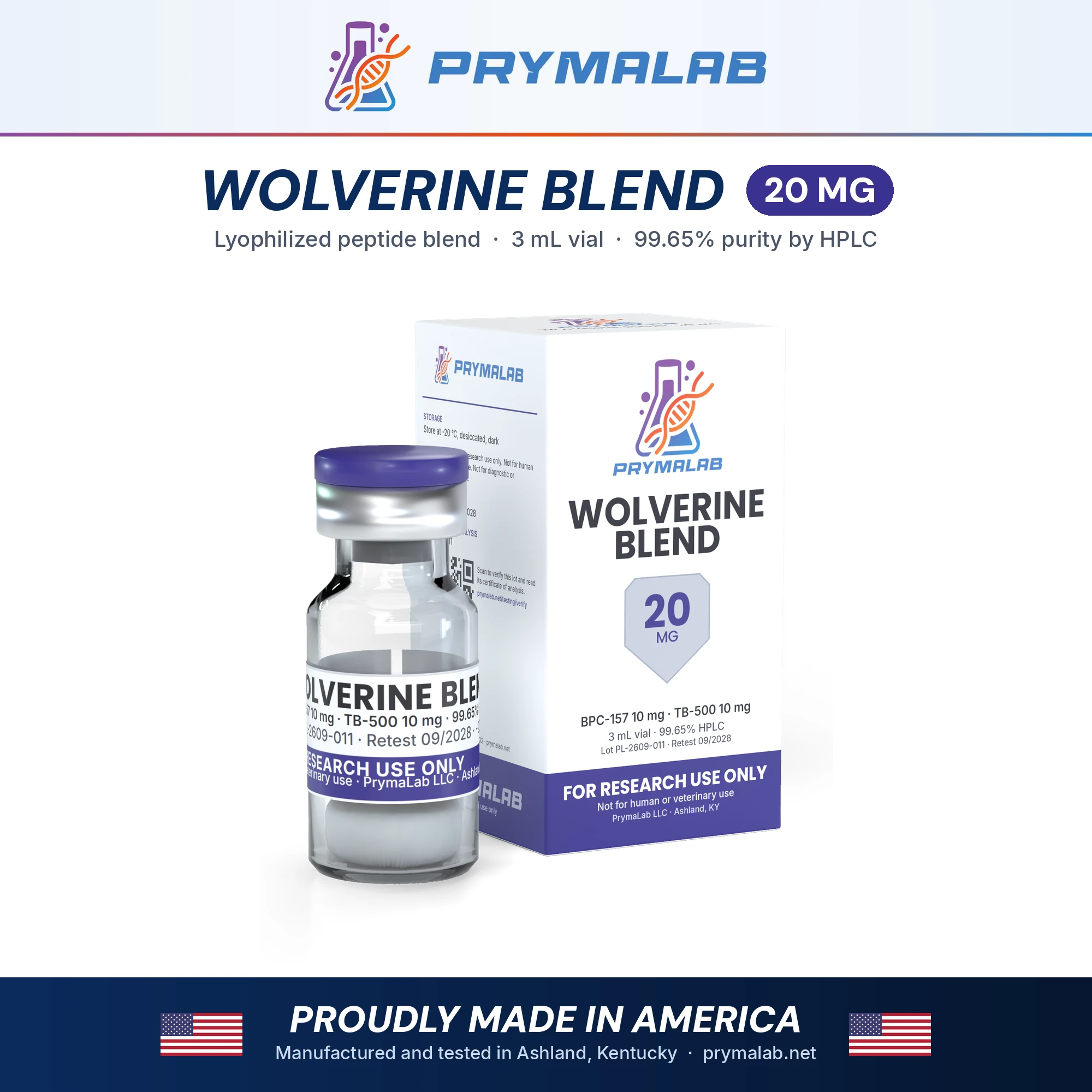
Wolverine Blend 20 mg
BPC-157 + TB-500 in a 1:1 blend by weight.
- BPC-157
- 10 mg
- TB-500
- 10 mg
- Total blend
- 20 mg
- Format
- Freeze-dried powder
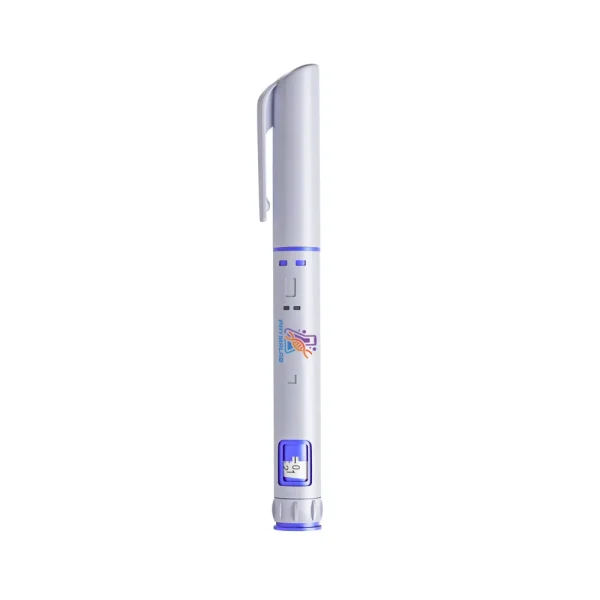
Wolverine Stack 40 mg
A 3 mL pen containing BPC-157 + TB-500.
- BPC-157
- 20 mg
- TB-500
- 20 mg
- Total blend
- 40 mg
- Solution volume
- 3 mL
Ingredient amounts, selected recovery reports and original vial documentation.
Research and Recovery Report Sources
- 1Lee & Padgett — Intra-Articular Injection of BPC 157 for Multiple Types of Knee Pain (2021)Small retrospective human series; four follow-up respondents received BPC-157 with TB4.
- 2Chang et al. — The promoting effect of pentadecapeptide BPC 157 on tendon healing involves tendon outgrowth, cell survival, and cell migration (2011)Laboratory study of rat tendon tissue and cells.
- 3Cerovecki et al. — Pentadecapeptide BPC 157 (PL 14736) improves ligament healing in the rat (2010)Rat medial collateral ligament injury study with follow-up through 90 days.
- 4Biçer et al. — Effects of BPC-157 and TB-500 on Achilles tendon healing in rats (2026)Four-group animal experiment measuring tissue and mechanical outcomes.
- 5Staresinic et al. — Effective therapy of transected quadriceps muscle in rat: Gastric pentadecapeptide BPC 157 (2006)Experimental rat muscle injury study assessing function, tissue structure, and mechanical strength.
- 6Guarnera et al. — The effect of thymosin treatment of venous ulcers (2010)Randomized phase 2 trial of topical thymosin beta-4 in 73 patients with venous ulcers.
- 7FDA — BPC-157-related bulk drug substances briefing document (2026)Scientific review prepared for the July 2026 Pharmacy Compounding Advisory Committee meeting.
Research references identify the preparations and settings studied. Community reports are unverified personal accounts selected for reported improvement. Product quantities follow the stated specifications; the original vial certificate is hosted on this website.