On this page
What Is the Wolverine Peptide Stack?
The Wolverine peptide stack combines BPC-157 and TB-500. It is also called the Wolverine blend or BPC-157 + TB-500 stack. The name describes a pairing of two peptides, rather than a separate peptide molecule.
BPC-157
A 15-amino-acid peptide studied in tendon cells and experimental tissue-repair models.
+TB-500
The supplied vial certificate identifies full-length, 43-residue N-acetyl thymosin β4.
Interest in the stack centers on joint discomfort, tendon injuries and recovery of movement. That interest comes from a mixture of laboratory research, limited human observations and personal accounts. Each provides a different kind of information.1234
What is in the Wolverine peptide stack? The vial contains 10 mg BPC-157 + 10 mg TB-500. The 3 mL pen contains 20 mg BPC-157 + 20 mg TB-500.
What Is in the Wolverine Peptide Stack?
Both formats contain equal amounts of BPC-157 and TB-500 by weight. The quantities below describe the whole vial or pen; they are not amounts to take at one time.
Ingredient amounts in each product
Wolverine blend vial: 20 mg
The freeze-dried vial contains 10 mg of each peptide. Its original certificate identifies lot PL-2609-011 and documents the in-house laboratory results for that lot.1
Wolverine stack pen: 40 mg
The preloaded pen contains 20 mg of each peptide in 3 mL. The total blend concentration is approximately 13.33 mg/mL, including approximately 6.67 mg/mL of each peptide.
Wolverine Peptide Stack: Vial and Pen
Choose the product format and review its composition below. The vial certificate is available as a PDF on this website.
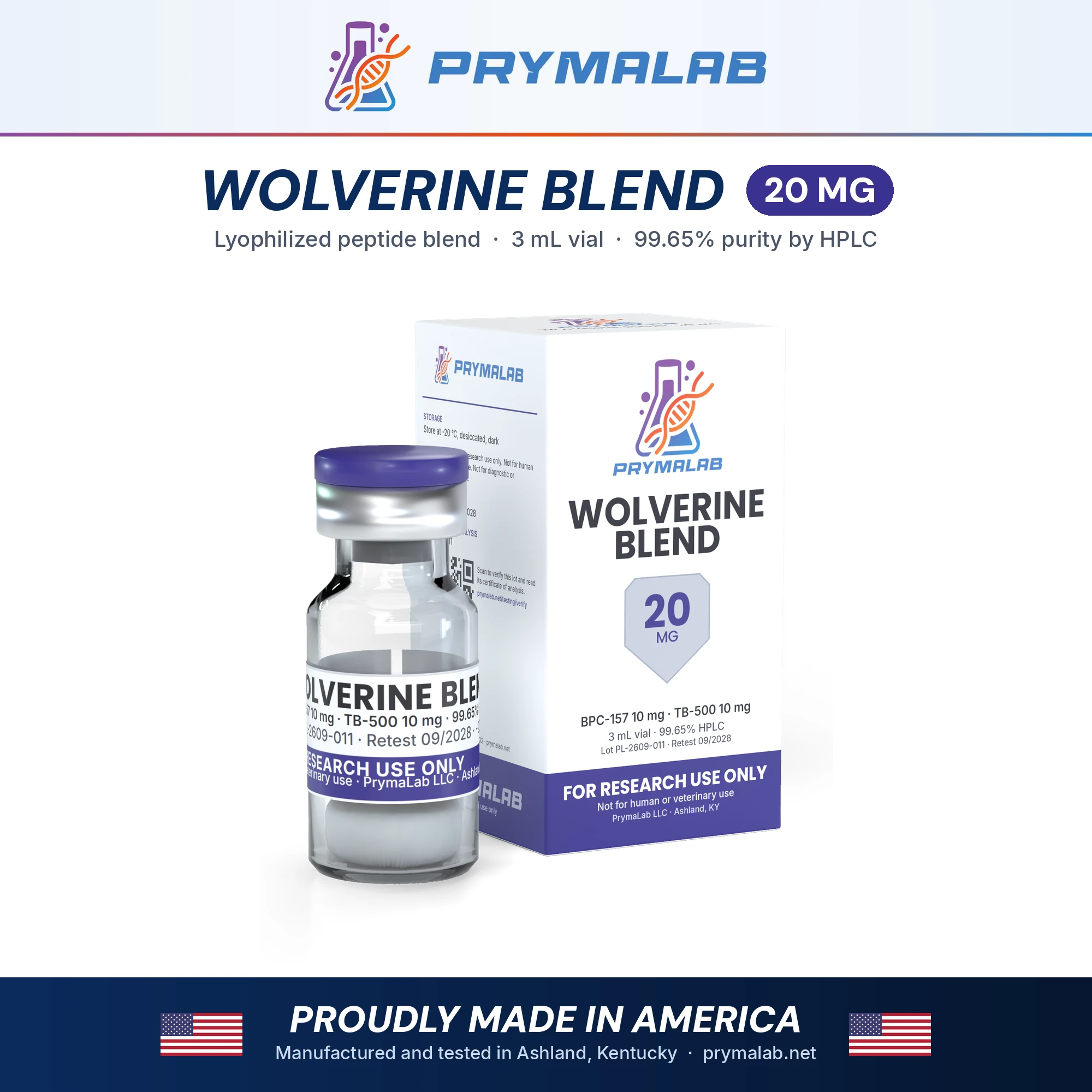
Wolverine Blend 20 mg
BPC-157 + TB-500 in a 1:1 blend by weight.
- BPC-157
- 10 mg
- TB-500
- 10 mg
- Total blend
- 20 mg
- Format
- Freeze-dried powder
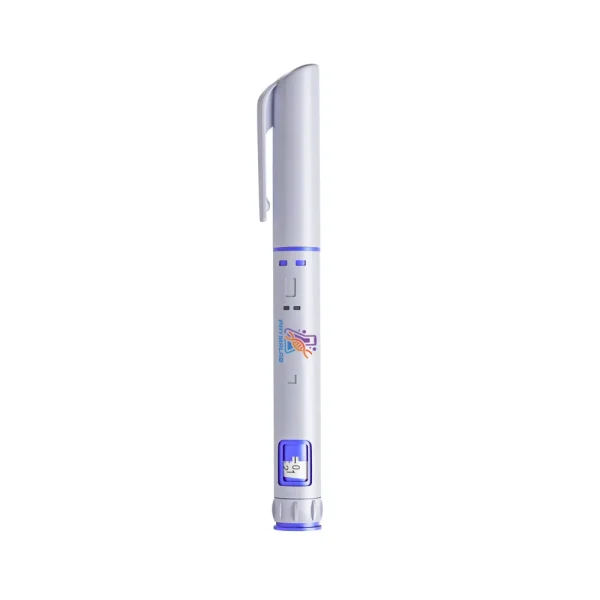
Wolverine Stack 40 mg
A 3 mL pen containing BPC-157 + TB-500.
- BPC-157
- 20 mg
- TB-500
- 20 mg
- Total blend
- 40 mg
- Solution volume
- 3 mL
Wolverine Peptide Benefits: Joints, Tendons and Recovery
The main questions concern joint symptoms, tendon repair and recovery of function. The research is early, and the studies below did not test the finished products shown on this page.
Joint discomfort
A small retrospective knee-pain report followed 16 people by telephone. Four had received BPC-157 with thymosin β4; three of those four reported improvement. There was no control group or standardized assessment of function.
Early clinical observations 4Tendon repair
An Achilles-tendon experiment in rats found changes in tissue organization in treated groups. The combination did not provide additional benefits over either peptide alone in that experiment.
Experimental injury model 3Cell movement
BPC-157 experiments using rat tendon tissue and cells reported increased cell migration and survival under oxidative stress. These findings help explain the research interest in tendon biology.
Laboratory findings 2These findings support further investigation. They do not establish that a commercial Wolverine blend heals a torn tendon, restores cartilage or shortens recovery after an injury.
Joint comfort, tendon and muscle research, and selected recovery accounts.
Wolverine Peptide Stack Before and After
These selected positive reports describe changes in joint comfort, movement and activity during BPC-157 + TB-500 use. They are public personal accounts, not reviews of this website's products.
Shoulder comfort during pressing
Improvement reportedAn author reported more comfortable pressing, with later pain-free activity.5
Read the full before-and-after account ↗
Meniscus symptoms and gym activity
Improvement reportedAn author reported less pain, clicking and swelling during recovery.6
Read the full before-and-after account ↗
Knee comfort and mobility
Improvement reportedOne person reported better knee comfort and movement.7
Read the full before-and-after account ↗
Selected for reported improvement. These accounts are unverified and are not a representative sample. They cannot establish which intervention caused a change, how often improvement occurs, or whether an injury has healed.
Starting symptoms, reported changes, follow-up and other care.
Wolverine Peptide Stack Dosage and Cycle Length
A Wolverine peptide dosing chart needs to distinguish total blend, the amount of each peptide and the period described. The dedicated dosage article records actual quantities from original public accounts and shows how their daily and weekly totals are calculated.
Contains 0.5 mg BPC-157 + 0.5 mg TB-500. A statement of “1 mg each” instead describes 2 mg combined.
The vial and pen labels describe whole-product quantities. Those amounts are separate from a reported daily amount or cycle length.
Individual accounts use different schedules and do not establish a standard human regimen. The full guide separates source observations, calculated totals and product concentration.
Daily and weekly totals, course lengths and the 1:1 ingredient ratio.
Wolverine Peptide Side Effects
Positive recovery accounts do not establish the frequency of side effects. The evidence cited here cannot reliably define a long-term safety profile or a standard adverse-effect rate for the finished Wolverine blend.
FDA's review of BPC-157 highlights limited human safety information and concerns about immune reactions and peptide-related impurities. A purity result does not answer those clinical safety questions.8
These products are supplied for laboratory research. Persistent joint pain or a suspected tendon injury needs a clinical assessment; an online recovery account cannot diagnose the cause or establish that an injury has healed.
Wolverine Vial Testing and Batch COA
The original certificate for the 20 mg Wolverine vial is available below. It identifies the lot and reports identity, HPLC area purity, water, endotoxin and sterility results from an in-house laboratory.1
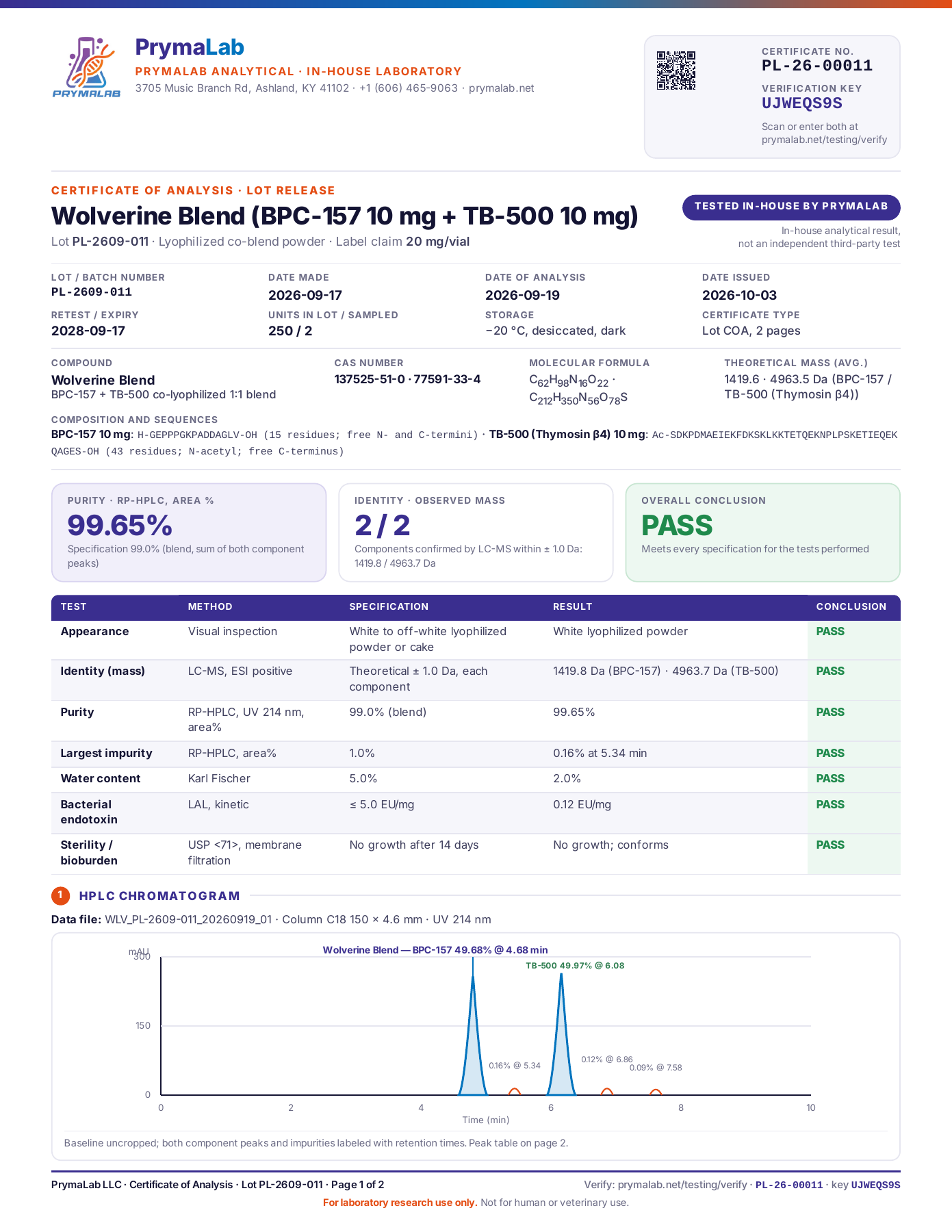
Wolverine Blend 20 mg — vial COA
- Lot
- PL-2609-011
- Certificate
- PL-26-00011
- Stated composition
- BPC-157 10 mg
TB-500 10 mg - Reported HPLC area purity
- 99.65%
- Reported identity
- Both components
This document covers the named lyophilized vial lot. It is not a certificate for the finished 3 mL pen, an independent third-party report or a clinical efficacy study.
Identity, HPLC area purity, microbiology and the original two-page certificate.
Wolverine Peptide Stack: Frequently Asked Questions
What is the Wolverine peptide stack?
It is the pairing of BPC-157 and TB-500. “Wolverine peptide,” “Wolverine blend” and “Wolverine stack” are names used for this combination. The products on this page contain equal amounts of the two ingredients by weight.
What does the Wolverine peptide stack do?
How much is in the Wolverine pen?
The 3 mL autoinjector contains 40 mg total: 20 mg BPC-157 and 20 mg TB-500. The vial contains 20 mg total: 10 mg of each ingredient.
How long do Wolverine before-and-after results take?
The selected recovery accounts identify their individual follow-up periods. The timing varies between accounts and does not establish a reliable recovery timetable for another injury.
Is there a standard Wolverine peptide dosage?
The cited sources do not establish a standard human dose. The dosage guide records actual community-reported amounts and explains total-blend, per-ingredient and concentration calculations.
Which Wolverine product formats are listed here?
This page lists a 20 mg lyophilized vial and a 40 mg preloaded 3 mL autoinjector. The product section shows the ingredient amounts for each format.
Research, Reports and Product Documentation
- 1Original Wolverine vial certificate
Lot PL-2609-011; certificate PL-26-00011. Stated composition and reported in-house analytical results for the 20 mg lyophilized vial. - 2BPC-157 tendon-cell research
Chang et al. Tendon-explant and fibroblast experiments involving cell movement and survival under oxidative stress. - 3Achilles-tendon repair experiment
Biçer et al. BPC-157, TB-500 and their combination in a rat tendon-repair model. - 4Retrospective knee-pain report
Lee and Padgett. Telephone follow-up after BPC-157 alone or together with thymosin β4; a small uncontrolled study. - 5Community account: shoulder comfort u/604Hustle. Original public account.
- 6Community account: meniscus symptoms u/dothethizzledance. Original public account.
- 7Community account: knee mobility u/Silly-One-7002. Original public account.
- 8FDA review of BPC-157
FDA briefing document discussing evidence, safety information, immunogenicity and peptide-related impurities.
Scientific studies describe the preparations they tested. Community accounts are unverified personal reports and do not establish treatment effects. The vial PDF is reproduced as supplied.